Watercolor Cute Cat Clipart: Gentle Charm for Modern Projects
There is a quiet shift happening in design. After years of sharp vectors, flat icons, and hyper-polished minimalism, something softer is creeping back into brand identities, social feeds, and product packaging. Watercolor cute cat clipart sits right at the center of that shift. It is not trying to scream for attention. Instead, it invites people in with warmth, texture, and a handcrafted feel that stock photography and rigid illustrations rarely achieve.
If you have scrolled through Etsy listings, browsed indie branding portfolios, or even looked at children's book layouts, you have likely encountered this style without realizing its potential. What makes watercolor cute cat clipart stand out is the marriage of two powerful visual cues: the organic, unpredictable texture of watercolor paint and the universal appeal of cats. That combination creates a design asset that feels both nostalgic and refreshingly current.
What Defines Watercolor Cute Cat Clipart as a Design Asset
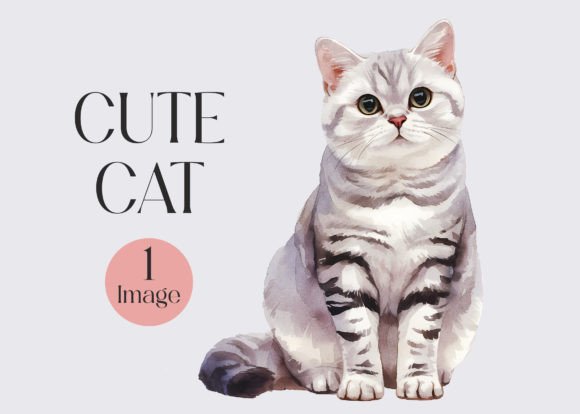
At its core, watercolor cute cat clipart is a collection of hand-painted or digitally rendered cat illustrations that mimic the behavior of real watercolor paint. The edges bleed. The pigment pools in some areas and fades in others. Colors overlap in ways that feel natural rather than mathematically precise. These illustrations typically feature cats in playful, affectionate, or curious poses—sleeping curled up, reaching for a butterfly, sitting with exaggerated large eyes, or peeking over something.
The visual personality leans into softness. Pastel palettes dominate: blush pinks, lavender grays, cream whites, dusty blues, and gentle yellows. But bolder versions exist too, using deep indigos, rich oranges, and forest greens for contrast. The key is the watercolor texture itself. It gives each cat a one-of-a-kind feel, even when the same base illustration is used multiple times. That irregularity is a feature, not a flaw. In a world of cookie-cutter graphics, imperfection stands out.
This style works because it evokes emotion without being saccharine. It is cute, but not cloying. It is playful, but also sophisticated enough for adult audiences when used thoughtfully. Designers often describe the appeal as "whimsy with restraint." The watercolor medium adds an artistic credibility that flat vector cats cannot replicate.
Where Watercolor Cute Cat Clipart Delivers Real Value
The versatility of this clipart style is broader than most people assume. It is tempting to pigeonhole it into children's content only, but that undersells its reach. Let me walk through the spaces where it truly shines.
Branding and Identity Work
Small businesses and creative entrepreneurs are the biggest adopters. Think of a boutique tea company, a candle maker, a stationery brand, or a small-batch pet treat business. Watercolor cute cat clipart becomes the visual anchor for their brand identity. It appears on logo lockups, packaging labels, business cards, and website headers. The handcrafted texture signals authenticity and care—two qualities that independent brands rely on to differentiate themselves from corporate competitors.
When used in logos, the clipart often pairs best with a clean sans serif or a delicate script font to balance the organic illustration with readable typography. The result is a brand that feels personal without looking amateurish.
Editorial and Publishing
Children's books, zines, blogs, and lifestyle magazines benefit from this clipart's emotional tone. A watercolor cat illustration can carry an entire spread without needing additional decorative elements. In editorial design, the clipart works as spot illustrations, chapter headers, or full-page art. The texture reproduces well in print when using uncoated paper stocks, where the watercolor effect feels even more natural.
Bloggers and content creators use these assets to break up text-heavy pages. A post about mindfulness, cozy living, or creative hobbies becomes immediately more relatable when accompanied by a soft watercolor cat image. It sets a mood before the reader even engages with the words.
Social Media Graphics and Digital Content
Instagram feeds, Pinterest pins, YouTube thumbnails, and digital planners have embraced this aesthetic wholeheartedly. The reason is simple: watercolor cute cat clipart stops the scroll. In a feed filled with polished product photos and templated quotes, something with visible brush strokes and organic color variation feels human. Content creators use it for announcement posts, seasonal campaigns, quote cards, and story backgrounds.
The digital space also allows for layering. You can scale the clipart, rotate it, adjust opacity, and combine it with modern typography without losing quality, especially if you are working with high-resolution PNG files that include transparent backgrounds. That flexibility is crucial for maintaining a consistent visual identity across platforms.
Packaging and Product Design
Physical products benefit enormously from this style. Stickers, washi tape, greeting cards, magnets, mugs, tote bags, phone cases, and art prints all become more desirable when decorated with watercolor cat illustrations. Crafters and small-scale product sellers use these assets to create cohesive collections without needing to hire an illustrator for every single item. A single set of watercolor cute cat clipart can theme an entire product line.
How Watercolor Cute Cat Clipart Shapes Brand Perception and Audience Engagement
Design choices communicate values. When you choose watercolor cute cat clipart as part of your brand identity or project assets, you are signaling approachability, creativity, and attention to craftsmanship. The texture inherent in watercolor art suggests that someone spent time creating it. That perceived effort builds trust with your audience.
There is also a readability factor, though not in the typographic sense. The visual hierarchy of a layout improves when a soft illustration balances a bold headline or a dense paragraph. A watercolor cat positioned near a call-to-action button can draw the eye naturally without feeling manipulative. It softens the sales message and makes the interaction feel more like a conversation.
Consistency is another benefit. When you use a curated set of clipart from the same collection, every piece shares the same color palette, brush style, and level of detail. That uniformity strengthens brand recognition over time. Your audience starts associating that specific watercolor texture and cat style with your brand alone, even if similar assets exist elsewhere.
Professionalism comes from restraint. The most effective uses of this clipart are not the ones that cram every available space with cats. Instead, they use one or two well-placed illustrations to guide the viewer's attention and reinforce the emotional tone. That selective approach elevates the work from mere decoration to deliberate design.
Choosing the Right Watercolor Cute Cat Clipart for Your Project
Not all watercolor cat clipart is created equal. Quality varies significantly between collections, and making the wrong choice can undermine your project's credibility. Here is practical guidance for evaluating what you find.
Evaluate the Texture and Color Quality
Look at the brushwork. Does the watercolor effect look natural, or does it feel like a cheap digital filter? High-quality clipart shows genuine pigment variation, soft edges, and subtle color blending. Avoid collections where the watercolor effect looks repetitive or overly uniform across different poses. Each illustration should feel like its own painting, not a copy-paste job with recolored fills.
Color palette matters for brand fit. If your brand uses muted earth tones, a pastel-heavy set will clash. Seek collections that offer range or that specifically match your existing brand guidelines. Some premium sets even include color variation files, letting you choose between warm, cool, or neutral undertones.
Check the File Formats and Licensing
For digital work, you need high-resolution PNG files with transparent backgrounds. For print, look for at least 300 DPI. Vector files like SVG or AI are ideal for scaling without quality loss, though watercolor textures are often raster-based. Some collections provide both raster and vector hybrid files.
Commercial licensing is non-negotiable if you plan to sell products featuring the clipart. Read the license terms carefully. Some creators allow unlimited commercial use. Others cap the number of products or require attribution. If you are a small business owner, paying a bit more for a premium commercial license saves legal headaches later.
Test Pairings with Typography and Other Design Assets
Watercolor cute cat clipart rarely works alone. It needs companions. Test potential pairings with your chosen typeface. A delicate script font can echo the handcrafted feel of the watercolor. A clean sans serif provides contrast and readability. A modern serif adds a touch of sophistication that balances the playful illustration.
Also consider how the clipart interacts with other design assets you already use. Does it clash with your photography style? Does it compete with your existing patterns or textures? Layering the clipart over a test mockup early in the design process saves you from reworking layouts later.
Practical Recommendations for Getting the Most Out of These Assets
Start small. Choose one or two illustrations and integrate them into a single project piece—a social media post, a product label, or a blog header. See how your audience responds before committing to a full brand overhaul. The organic feel of watercolor art often sparks more engagement precisely because it looks less corporate.
Mix scale and placement. A large cat illustration used as a background element with low opacity creates depth without overwhelming the layout. Small cat accents tucked into corners or alongside bullet points add surprise and delight. Repetition across a series of posts or products builds familiarity.
Respect the texture. Do not oversharpen or overprocess watercolor clipart. Part of its charm is the softness. Let it breathe. Pair it with ample white space, muted background colors, and simple typography. The goal is harmony, not competition.
Watercolor cute cat clipart is not a fleeting trend. It represents a broader move toward authenticity in visual communication. Audiences are tired of generic stock imagery. They want to see the human hand at work. This clipart delivers that without sacrificing quality or versatility. Whether you are a designer building a brand, a publisher illustrating a book, or a crafter creating products for a market stall, these assets give you a shortcut to emotional resonance that clean vectors simply cannot match.
Choose wisely. Use sparingly. Let the watercolor speak.