Watercolor Wedding Flowers Clipart
There is something immediately tender about watercolor florals. The soft edges, the unpredictable blooms of pigment, the way one petal fades into paper grain—it feels alive. Watercolor wedding flowers clipart captures that organic beauty in a reusable, scalable format. Whether you are designing a wedding invitation suite, building a brand around romance, or creating content for the modern bride, these hand-painted elements bring a warmth that sharp vector graphics often lack. They whisper instead of shout, and in wedding work, that whisper is exactly what tells a love story.
The visual personality of watercolor florals
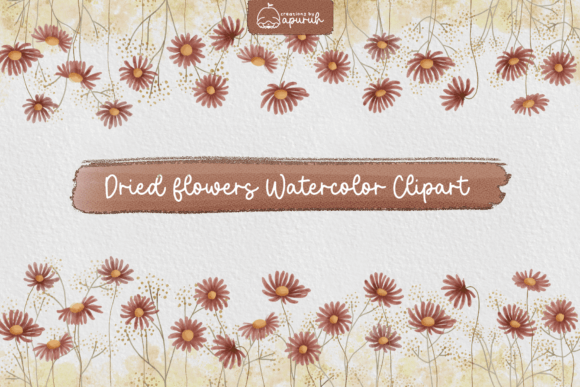
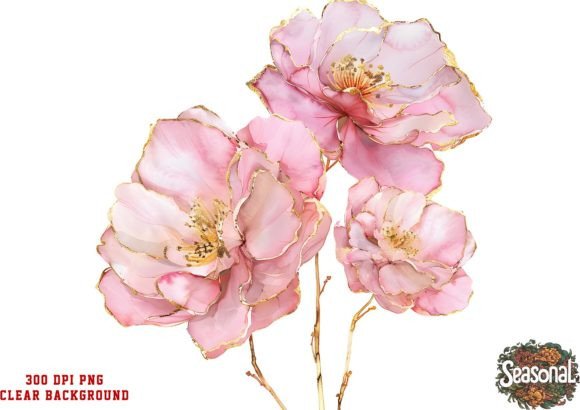
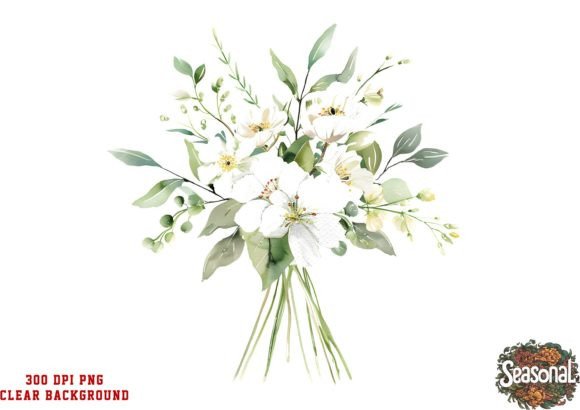
Watercolor wedding flowers clipart is defined by its gentleness. The strokes are not perfectly uniform; they carry the artist’s hand. A blush peony might have darker pigment pooling at its center, then feather outward into near transparency. Leaves are not solid blocks of green but layered washes of sage, mint, and olive. This unpredictability is the feature, not a flaw. It gives each arrangement a handcrafted feel that rigid, flat illustrations cannot replicate.
The style leans romantic, natural, and slightly nostalgic. It suits the current preference for organic weddings—think garden parties, barn venues, wildflower meadows, and minimalist tablescapes. But it also works beautifully in formal settings when paired with elegant serif or script typography. The watercolor texture adds depth without overwhelming the viewer. It is the kind of design asset that makes a layout feel finished, even when the composition is sparse.
From a practical standpoint, these clipart sets typically include individual floral elements, wreaths, bouquets, stems, and sometimes butterfly or leaf accents. They often come in PNG format with transparent backgrounds, which means you can layer them directly onto stationery, digital invitations, or social media templates without extraction work. Many premium collections offer multiple color palettes, allowing you to match a specific wedding theme without recoloring everything yourself.
Where watercolor florals elevate a project
Watercolor wedding flowers clipart is not a one-trick asset. Its versatility extends far beyond the save-the-date envelope. Here are the projects where it genuinely shifts the visual impact:
- Wedding invitations and stationery – This is the obvious use case, but it deserves depth. A full suite—invitation, RSVP card, details card, envelope liner—becomes cohesive when the same floral motif repeats across each piece. Watercolor elements prevent the suite from feeling printed or mass-produced. They look more like a custom letterpress job, even when you are printing at home.
- Social media graphics – Instagram posts, Pinterest pins, Facebook event banners, and story templates. Watercolor florals add a soft, scroll-stopping texture. They work especially well for wedding planners, photographers, and florists who want to maintain a visual thread across their content calendar.
- Brand identity for wedding-adjacent businesses – If you are a wedding photographer, venue owner, calligrapher, or bridal boutique, using watercolor wedding flowers clipart in your logo or brand collateral communicates warmth and artistry. It signals to couples that you understand the emotional weight of their day.
- Blog and editorial design – Wedding blogs, real-wedding features, and vendor spotlights benefit from decorative headers, pull-quote accents, and section dividers that use watercolor blooms. They break up long text blocks without feeling like generic stock imagery.
- Packaging and printed collateral – Favor tags, welcome bags, menu cards, table numbers, and signage. Watercolor florals on these items make the tactile experience of the wedding day more consistent. Guests notice when the paper in their hand matches the tone of the ceremony.
- Digital products and templates – Creators selling wedding planners, guest lists, seating chart templates, or planner stickers can use watercolor clipart as a differentiation point. Buyers gravitate toward products that look premium and thoughtful.
How the clipart shapes perception and engagement
Design choices affect how audiences feel before they read a single word. Watercolor wedding flowers clipart does not just decorate a layout; it sets a tone. When a couple sees a watercolor bloom on an invitation, they subconsciously associate the event with softness, care, and authenticity. That emotional connection matters because wedding decisions are deeply personal. You are not selling a date on a calendar; you are selling a memory.
From a brand identity perspective, consistent use of watercolor florals builds recognition. A wedding photographer who consistently uses the same floral motif in their watermark, website hero image, and Instagram highlights creates a visual shorthand. Followers begin to associate that bloom with the photographer’s style. Over time, that recognition becomes trust. The same principle applies to invitation designers, stationery brands, and wedding planners. When your visual language is cohesive, you look more professional and more memorable.
Readability also benefits from thoughtful placement. Watercolor elements are semi-transparent by nature, which means they can sit behind text without obstructing it—if you choose the right opacity and color contrast. A bouquet placed behind an engagement session title can add atmosphere without making the words hard to read. This is especially useful for editorial layouts where you want imagery and text to live in the same space, not compete.
There is also a modern typography consideration. Watercolor florals pair best with fonts that do not fight for attention. A delicate script, a clean sans serif, or a refined serif all complement the softness of the paint. Avoid heavy, bold display fonts that clash with the airy texture. The clipart leads the emotional story; the type supports it.
Choosing the right set for your project
Not every watercolor wedding flowers clipart collection is created equal. Some are meticulously painted with high resolution and multiple angles; others feel rushed and pixelated. Making the right choice starts with evaluating your actual needs, not just the prettiest preview image.
Resolution and scaling matter. A PNG file that looks crisp on a phone screen may blur on an 8-by-10-inch invitation. Always check the DPI and pixel dimensions. For print projects, look for files at 300 DPI or higher. For digital-only use, 72 DPI is usually sufficient, but higher resolution still gives you flexibility to resize without quality loss.
Color palette compatibility is another layer. A clipart set with a fixed warm blush and dusty rose palette will not adapt easily to a navy-and-gold wedding theme. Look for collections that offer multiple color variations or include elements with softer, neutral tones that blend well. Some premium sets offer editable color overlays in Procreate or Photoshop, which is a massive time saver.
Variety of elements affects how far you can stretch one purchase. A set with only a few blooms forces you to repeat the same flowers, which can look monotonous. Collections that include buds, leaves, full bouquets, single stems, wreaths, and filler foliage give you more compositional freedom. You can build unique layouts without buying multiple sets.
Commercial licensing is critical if you are a designer, marketer, or small business owner. Always read the license terms. Some clipart sets only permit personal use or require attribution. Others offer full commercial rights, including the ability to use the art in logo designs, digital products, printed goods for sale, and client projects. If you are building a business around wedding design, investing in a commercial font or clipart set with clear usage rights saves legal headaches later. The same principle applies to design assets more broadly—know what you are allowed to do before you publish.
File formats also influence workflow. PNG with transparent background is standard, but sets that include SVG or EPS files give you scalability and editability for web and vector applications. If you are designing in Canva, look for sets that specifically mention Canva compatibility or offer drag-and-drop ready files.
Practical tips for pairing and placement
Good design with watercolor wedding flowers clipart comes down to restraint. It is tempting to fill every corner with blooms, but the most effective layouts leave breathing room. Use a single large bloom as a hero element on the invitation front, then repeat smaller accents inside. This creates a visual punctuation that guides the eye without overwhelming it.
Font pairing is where many projects succeed or fail. A flowing script like a modern calligraphy style pairs beautifully with the organic curves of watercolor. A serif font in a light weight adds elegance and readability for body text. If you want contrast, a crisp sans serif font in all caps can ground the floral softness with structure. The conversation between the flower texture and the typeface should feel intentional, not accidental.
For logo design, consider using a single floral element instead of a full bouquet. A lone watercolor rose or eucalyptus stem next to your brand name is memorable and scaleable. It works as a favicon, a watermark, and a social avatar. The transparency of the watercolor style keeps the logo feeling modern and approachable.
In editorial design and web design, watercolor florals function beautifully as section dividers, background washes, or header embellishments. A full-bleed watercolor backdrop with white text overlaid creates a dreamy, editorial spread. Just keep the text size generous and the contrast high. Light pink over white is romantic but hard to read; deep blush over white is legible and still soft.
If you are designing social media graphics, use the clipart consistently across your grid. A repeating floral motif in the corner of every post builds brand recognition faster than a random graphic each time. Think of it as a visual signature. Instagram profile grids that use a consistent floral element feel curated and professional.
Final thoughts on working with watercolor florals
Watercolor wedding flowers clipart gives designers and creators a bridge between handcrafted art and digital efficiency. You do not need a paintbrush or a scanner to get the watercolor look. You just need a quality set, a clear vision, and a willingness to let the textures do the emotional work. The best applications feel effortless because the clipart was chosen intentionally, not just because it looked pretty.
For busy entrepreneurs, marketers, and publishers, this style of design asset saves hours of illustration time while still delivering a premium, bespoke feel. It elevates wedding projects from generic to thoughtful. And in an industry where couples are investing deeply in the aesthetic of their day, that effort shows.
Whether you are designing for a client, building your own brand, or crafting content that resonates with an audience planning their wedding, watercolor florals offer a versatile, trustworthy tool. Choose carefully, pair wisely, and let the pigment speak.