Cute Mouse Watercolor Clipart for Creative Projects
If you have spent any time browsing design assets for children's products, greeting cards, or social media content, you have likely encountered the undeniable charm of Cute Mouse Watercolor Clipart. These illustrations bring a soft, handcrafted feel that vector art often lacks. The watercolor medium introduces gentle color bleeds, subtle texture, and organic edges that make each mouse character feel alive. Unlike flat digital graphics, this clipart carries the warmth of a physical painting, which resonates with audiences looking for authenticity in visual communication. Whether you are designing for a nursery, a stationery brand, or a playful blog, these mouse illustrations offer a versatile foundation that pairs well with both modern and vintage aesthetics.
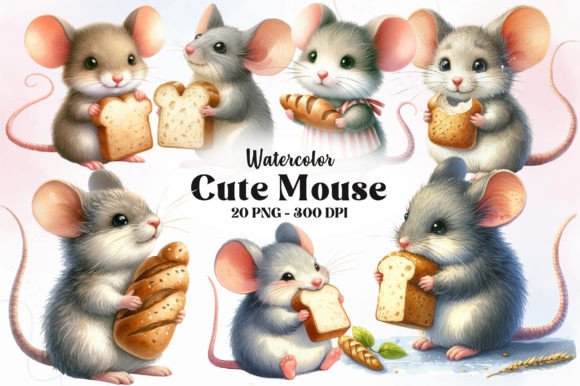
The appeal lies in the combination of subject and style. Mice are universally endearing creatures, often associated with curiosity, gentleness, and a hint of mischief. When rendered in watercolor, their fur takes on soft gradients of gray, brown, or pastel tones, while whiskers and ears receive delicate detail work. The best sets include multiple poses—sitting, reaching, holding objects, or peeking around corners—so you can build a narrative or composition without repeating the same image. This variety makes Cute Mouse Watercolor Clipart a practical addition to any designer's toolkit.
Visual Characteristics and Artistic Appeal
Watercolor clipart differs from standard digital illustrations because it retains the imperfections of real brushwork. You see lighter washes where the paint diluted, heavier pigment in shadow areas, and occasional splatters or blooms that add character. In the case of mouse-themed sets, these traits work beautifully. Soft gray washes with pink ears and noses create a gentle palette that feels neither too bold nor too muted. Many collections also include coordinating elements like acorns, leaves, teacups, or flowers that match the watercolor treatment, giving you a cohesive ecosystem of assets.
Another strength is the handwritten font compatibility. Since watercolor clipart has an organic, unpixelated quality, it pairs naturally with script fonts or handwritten typefaces. You can drop a mouse illustration next to a hand-lettered quote and the two elements will feel like they belong together. This is harder to achieve with hard-edged vector icons. For logo design in children's brands or boutique shops, the combination of display font text and watercolor imagery creates a memorable brand identity that stands out on packaging or storefronts.
Texture plays a significant role in how viewers perceive quality. A premium font paired with flat clipart can sometimes feel mismatched, but watercolor textures bridge that gap. They introduce a tactile quality that makes digital work feel printed. When you are building a website for a daycare center or designing social media graphics for a nature-themed shop, using watercolor mouse illustrations immediately signals warmth and approachability.
Where Cute Mouse Watercolor Clipart Works Best
The versatility of this clipart extends across multiple project types. In editorial design, children's book layouts, and educational printables, the illustrations serve as focal points or decorative accents. Parents and teachers respond well to imagery that feels gentle rather than cartoonish. For packaging design, especially for organic snacks, baby products, or boutique gifts, a watercolor mouse holding a berry or flower communicates wholesomeness without needing extra text. The visual does the heavy lifting.
Web design also benefits from this asset. Landing pages for subscriptions boxes, parenting blogs, or crafting supply stores often use hero sections with large illustrations. A single Cute Mouse Watercolor Clipart element scaled up and placed behind headline text creates depth without requiring a full background illustration. You save load time while maintaining visual interest. In social media graphics, these images work well for pinned posts, story backgrounds, or quote cards. The watercolor style softens the screen glare and makes scroll-stopping content that feels less commercial.
For brand identity projects, small businesses that serve families or creatives often ask for mascots or recurring motifs. A mouse character in different poses can be used across business cards, thank-you cards, and website headers. The consistency builds brand recognition without needing a complex typeface system. Even if you use a standard sans serif font for body text, the clipart provides the personality.
Practical Considerations for Project Fit
When evaluating whether a specific watercolor mouse set suits your project, consider the resolution and file format. Many commercial sets offer PNG files with transparent backgrounds, which is essential for layering over colored backgrounds or photos. Check whether the set includes high-resolution versions for print and lower resolutions for web. You do not want to stretch a small file for a banner and lose the watercolor crispness. Also review the color palette. Some sets lean toward warm earth tones, while others use pastel pinks and blues. Choose one that aligns with your existing design assets and brand guide.
Style consistency matters more than quantity. A set with fifteen well-drawn mice in various activities is more useful than a set with fifty images that vary wildly in quality or shading. Look for illustrations where the lighting direction stays the same. If one mouse has light hitting from the left and another from the right, composing them together becomes tricky. The best commercial font and clipart pairings happen when both elements share a cohesive light source and mood.
Readability and Visual Hierarchy with Watercolor Elements
Watercolor clipart, by nature, has lower contrast than sharp vector graphics. This can affect readability if you place text directly over busy illustrations. To maintain clear visual hierarchy, reserve the clipart for spaces where text is minimal—headlines, call-to-action buttons, or accent areas. For body copy, keep the illustration separated or use a subtle drop shadow or white overlay behind the text. A common layout technique is to place the mouse illustration on one side of the page and let the text flow beside it. This preserves readability while still showcasing the art.
For packaging design, consider where the clipart sits relative to product information. If you are designing a tea box label, the mouse illustration can anchor the brand name, while nutritional facts remain in a clean serif font or sans serif font on the side. The contrast between the organic illustration and structured typography creates a pleasing tension that professional designers often use to add interest.
Testing Font Pairings with Mouse Clipart
Selecting the right font pairing for watercolor clipart requires testing. Start with a script font or handwritten font for headings to echo the brushstrokes in the illustration. Then choose a sans serif font for supporting text to keep things grounded. For example, a thick, bold display font in a rounded style works well for a playful brand, while a delicate serif font suits a more sophisticated line of baby products. Print out or mock up a few combinations before finalizing. What looks good on screen may not hold up in print, especially if the watercolor art uses light washes that compete with thin letterforms.
Also pay attention to spacing. Watercolor clipart often has irregular edges, so leaving generous white space around both the illustration and the headline prevents visual clutter. Crowding a delicate mouse illustration with dense text undermines its charm. Treat the clipart as a design asset that deserves breathing room.
Licensing and Commercial Use
Before using any Cute Mouse Watercolor Clipart in client work or products for sale, verify the license terms. Some marketplaces offer sets under standard commercial licenses that allow use in printed goods, digital products, and marketing materials up to a certain sales threshold. Others require extended licenses for larger distribution or for use in logo designs where the illustration becomes a core part of the brand. Always read the fine print. Using a clipart set for a client's logo design without proper licensing can create legal issues later. If you are a small business owner or entrepreneur, keep receipts and license documents alongside your project files.
Many artists who create watercolor clipart also offer custom commissions. If you find an illustrator whose style matches your vision, reaching out for a custom set of mouse characters can give you exclusive assets that competitors cannot use. That adds real professionalism and recognition to your brand. For content creators and bloggers, free or low-cost clipart sets are fine for blog graphics and thumbnails, but for monetized products, invest in properly licensed design assets.
Final Recommendations for Designers and Marketers
If you are building a brand around warmth, family, nature, or education, watercolor mouse clipart offers a shortcut to emotional connection. Avoid overusing it—one or two well-placed illustrations per layout keep the focus on your message. For social media graphics, alternate between clipart and photography to prevent visual fatigue. For editorial design, use the clipart as chapter dividers or side accents rather than full-page backgrounds.
Consider the longevity of your design. Trends shift, but watercolor illustration has remained popular because it evokes handmade craftsmanship. A brand built around this aesthetic ages better than one tied to a fleeting graphic trend. Whether you are creating a children's book, a product label, or a website for a boutique brand, Cute Mouse Watercolor Clipart provides a flexible, emotionally resonant visual language that connects with audiences of all ages.
Finally, store your clipart files in an organized folder with clear naming conventions. When you need a mouse holding a flower for a spring promotion, you want to find it instantly rather than scrolling through hundreds of files. With the right preparation and thoughtful pairing with complementary typefaces, these illustrations become a reliable part of your creative workflow.