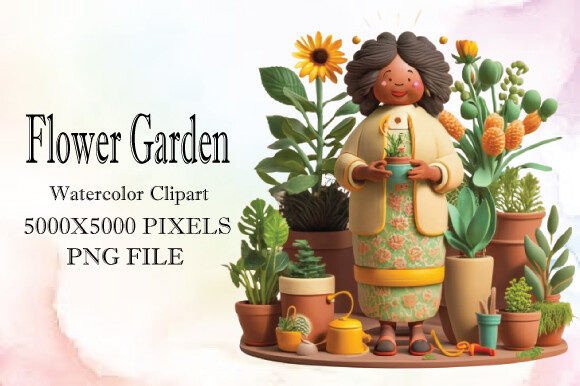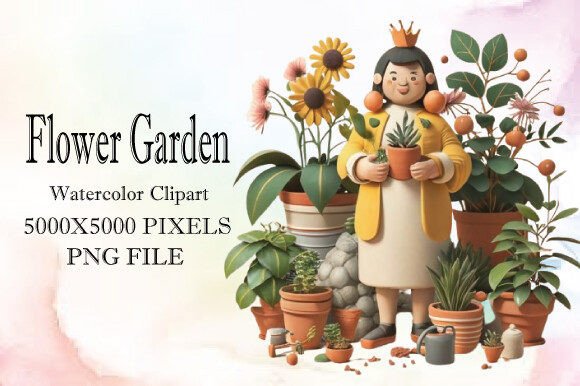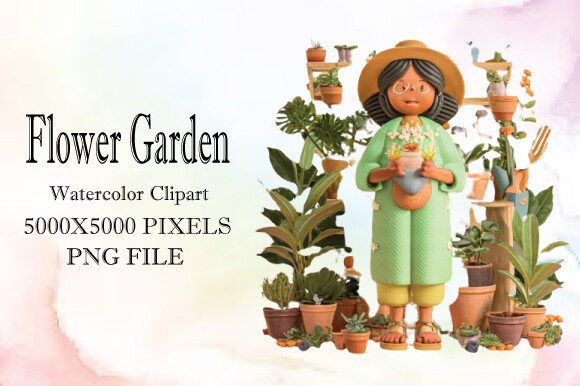
Flower Garden Watercolor Clipart 9: A Versatile Design Asset
If you have ever searched for botanical imagery that feels both polished and organic, you have likely encountered the challenge of finding clipart that does not look stiff or generic. Many digital assets lean either too realistic or too cartoonish, leaving a gap for something that feels painterly, warm, and genuinely flexible. That is exactly where Flower Garden Watercolor Clipart 9 steps in. This collection offers a set of hand-painted botanical elements that bring a soft, natural presence to any project. Whether you are designing a wedding invitation, building a brand identity for a skincare line, or creating social media content for a lifestyle blog, these watercolor blooms can become a core part of your visual toolkit.
The appeal of this set lies in its balance between detail and softness. Each flower, leaf, and stem carries the characteristic bleeding edges and subtle color gradients that watercolor is known for, but the compositions remain clean enough to layer into modern layouts. The palette typically leans toward garden-inspired hues—blush pinks, sage greens, lavender purples, and buttery yellows—so the clipart feels cohesive without being repetitive. For designers and content creators who want to evoke nature, calm, or elegance, Flower Garden Watercolor Clipart 9 offers a ready-made aesthetic that would otherwise take hours to paint from scratch.
Visual Personality and Creative Strengths
Watercolor clipart occupies a unique space in digital design. It is not as rigid as vector flat icons, nor as unpredictable as scanned traditional paintings. This particular set leans into a romantic, slightly whimsical style. The brushstrokes are visible, the transparency varies naturally, and no two elements feel mechanically identical. That handmade quality is exactly what makes it stand out for branding projects where authenticity matters. A skincare brand, for example, might use these florals on product labels or website headers to signal natural ingredients without having to commission original watercolor art for every SKU.
From a typography and layout perspective, the clipart works well as either a focal point or a supporting element. A single large rose can anchor a logo or a blog header, while smaller sprigs and leaves work beautifully as dividers, bullet points, or corner accents. The style pairs especially well with modern typography choices: a clean sans serif font keeps the overall look fresh, while a delicate script font or handwritten font can amplify the handcrafted feel. If you are working on editorial design, such as magazine spreads or brochure covers, layering these watercolor elements behind text adds depth without competing with readability.
One practical advantage I have noticed is how forgiving the clipart is across different backgrounds. Because watercolor naturally blends and softens edges, these elements sit gracefully on white, cream, pastel, or even dark backgrounds when exported with a transparent PNG. That flexibility reduces time spent on masking or color correction during the design process. For small business owners who are not full-time designers, this ease of use is a real time-saver.
Where the Clipart Delivers Real-World Value
Understanding where a design asset shines is just as important as knowing its visual style. Flower Garden Watercolor Clipart 9 is not a one-size-fits-all resource, but its best applications align with common needs across creative and commercial work.
Branding and Logo Design
For entrepreneurs building a brand identity from scratch, watercolor florals can serve as a signature visual element. A logo that incorporates a single floral motif immediately communicates softness, growth, or natural care—depending on the industry. Florists, wedding planners, organic beauty brands, and lifestyle coaches are obvious fits. But I have also seen consultants and authors use similar botanical elements as subtle brand markers in their presentation templates and website footers. When used sparingly, even one well-placed watercolor bloom can differentiate your brand from competitors who rely solely on geometric shapes or stock photography.
Packaging Design and Product Labels
Packaging is where the tactile nature of watercolor really shines. A product label with printed watercolor florals feels more artisanal than one with flat vector icons. For small-batch soap makers, tea companies, or candle brands, using Flower Garden Watercolor Clipart 9 on labels and hang tags creates a cohesive, premium look without requiring a dedicated illustrator. You can customize colors slightly in editing software to match your brand palette, or use the existing hues as inspiration for your overall packaging direction.
Social Media Graphics and Web Design
Social media feeds need variety, and watercolor elements add texture that photographs alone cannot always provide. A quote card overlaid on a watercolor botanical background feels more curated than a simple solid color. For bloggers and content creators, these florals work well as Pinterest pin backgrounds, Instagram story accents, or email newsletter headers. In web design, using watercolor clipart sparingly—such as a hero section background wash or a decorative divider between content blocks—can soften a site that might otherwise feel too rigid.
Invitations, Stationery, and Print Projects
Wedding and event stationery is perhaps the most natural home for this clipart. Save-the-date cards, ceremony programs, and thank-you notes all benefit from the romantic, organic feel of watercolor botanicals. But the application goes beyond weddings. Baby showers, bridal showers, garden parties, and even certain corporate event materials can adopt this style when the tone calls for warmth and approachability. Because the set includes multiple elements, you can compose unique layouts for each piece without repeating the exact same image.
How the Clipart Influences Visual Hierarchy and Audience Engagement
Design is about guiding the viewer's eye, and watercolor clipart influences that process differently than sharp-edged graphics. The soft transitions and irregular edges of watercolor blooms create natural resting points. When placed near text, they can frame the copy without overwhelming it. A well-chosen floral element placed beside a headline draws attention to that message more gently than a bold rule or icon might. For marketers and publishers, this subtlety matters. Audiences scanning a page or screen are more likely to pause when they encounter something that feels handcrafted and human, as opposed to purely mechanical.
There is also a psychological layer. Watercolor imagery tends to evoke feelings of calm, creativity, and nostalgia. For brands that want to be perceived as trustworthy, gentle, or artisanal, using watercolor clipart consistently across touchpoints reinforces that perception. It signals that attention was paid to detail, and that the brand values aesthetics over speed. In a crowded marketplace, that emotional connection can be the difference between a user scrolling past and stopping to explore.
From a readability standpoint, it is important to ensure that text remains clear when layered over or near these elements. High contrast between the text color and the background area is essential. If the clipart contains busy areas with multiple overlapping blooms, avoid placing body text directly on top. Instead, position the clipart as a sidebar accent, a background wash with reduced opacity, or a decorative border. Headlines and short phrases can sit more comfortably over watercolor if you add a subtle drop shadow or choose a bold display font that holds its own against the visual texture.
Choosing the Right Set and Evaluating Project Fit
Not all watercolor clipart sets are created equal, and Flower Garden Watercolor Clipart 9 offers specific features worth considering before you purchase or download. Start by reviewing the included elements: how many individual PNG files are provided? Does the set include a variety of flower types, leaf clusters, stems, and perhaps a few wreath or border compositions? Variety gives you more mileage for different projects. Also check the resolution. For print work like packaging design or editorial design, you need high-resolution files that will not pixelate at larger sizes. For web design and social media graphics, moderate resolution is usually sufficient, but having the option to scale down from a high-res original is always safer.
Color palette consistency is another practical consideration. Most watercolor clipart sets, including this one, offer a predefined set of hues. If your brand already uses a specific color scheme, you may need to adjust the clipart's colors in photo editing software. Some sets come with a broad enough palette to blend seamlessly with many backgrounds. If you are unsure, look for preview images that show the clipart on different surfaces—white, dark, textured—so you can gauge how the transparency and brush strokes behave.
Testing Pairings and Evaluating Licensing
Before committing to a clipart set for a major project, test it with your intended typography. A serif font like a classic Garamond or a modern slab serif can create a traditional, elegant pairing. A clean sans serif font like Montserrat or Lato keeps things contemporary and airy. For a more whimsical or feminine feel, a script font or handwritten font can echo the brushstroke quality of the watercolor itself. When testing, look at both the overall composition and the readability of the text. If the clipart overpowers the font, reduce the scale or opacity of the floral element. Good font pairing is about balance, not competition.
Licensing is another area where a little due diligence goes a long way. If you are using the clipart for personal projects like invitations or home decor, most standard licenses cover that. For commercial use—such as logo design, product packaging, or digital products you sell—verify that the license explicitly includes commercial rights. Some sets require attribution, while others do not. For small business owners and entrepreneurs who may resell designs, understanding the terms of your commercial font and clipart licenses protects you from legal complications down the road. Treat Flower Garden Watercolor Clipart 9 as a premium font or design asset in your library: respect the usage terms, and you can build entire brand systems around it with confidence.
Practical Recommendations for Everyday Use
If you are new to working with watercolor clipart, start with one or two hero elements—a single large bloom or a small bouquet—and build your layout around them. Avoid the temptation to use every element in one design. White space remains your best friend. Let the watercolor breathe. On a business card, a single small floral accent in a corner can be more memorable than a full-coverage background. In a blog post, a subtle leaf divider between sections keeps the reading experience smooth while reinforcing the botanical theme.
For those creating brand identity systems, consistency matters more than variety. Choose two or three floral elements from the set and use them repeatedly across your materials. This repetition builds visual recognition. A customer who sees the same watercolor rose on your website, your packaging, and your social media banners will begin to associate that image with your brand. Over time, the clipart stops feeling like a stock asset and starts feeling like your own signature.
Finally, consider layering these watercolor elements with other textures for added depth. A subtle paper texture in the background, combined with a watercolor floral overlay and crisp typography, creates a rich tactile illusion even on screen. This approach works particularly well for publishing projects like ebooks, course workbooks, or editorial layouts where you want the design to feel substantial without being cluttered.
In a design landscape where so many assets feel disposable or overly generic, finding a clipart set that brings genuine warmth and versatility is a quiet win. Flower Garden Watercolor Clipart 9 delivers that combination of ease and artistry, making it a practical choice for anyone who needs beautiful botanical imagery without the overhead of commissioning original paintings. Whether you are a seasoned designer or a small business owner wearing multiple hats, these watercolor florals can become a trusted part of your creative process.